
Eastern European Studies (Bachelor's Degree Program)Exploring Eastern Europe - historically, culturally and interdisciplinary
Eastern Europe, according to the common definition, stretches from the newer EU member states to Russia’s eastern border and includes the countries of Southeast Europe and the Caucasus. While Eastern Europe was once often described as a separate world beyond the Iron Curtain, the focus today is on its unique diversity of ethnicities, languages, cultures and religions, as well as on the numerous political, economic and cultural connections between the eastern and western regions of Europe.
The first interdisciplinary Eastern European Studies program in Switzerland has over twenty years of successful teaching about Eastern Europe. It covers the culture, languages and history of the entire region with an emphasis on Slavic cultures. A distinctive feature of the Basel model is the intensive engagement with film as a medium and cooperation with art history, as well as with social sciences and economics.
Focal areas of teaching and research
The Bachelor’s program in Eastern European Studies is offered jointly by the Department of Slavic Studies and the Chair of Eastern European History in the History Department. In addition, students can take relevant courses in art history, economics and social sciences.
The focus of Eastern European Studies at the University of Basel is on the culture and history of the 19th, 20th and 21st centuries. Courses cover all three subregions — the East Slavic area (Ukraine, Belarus, Russia/former Soviet Union), East Central Europe, and Southeast Europe. After an introductory phase giving an overview of the various regions and the methods and theories of the disciplines involved, students can choose their own regional and thematic focus areas and deepen their knowledge through study trips and stays abroad.
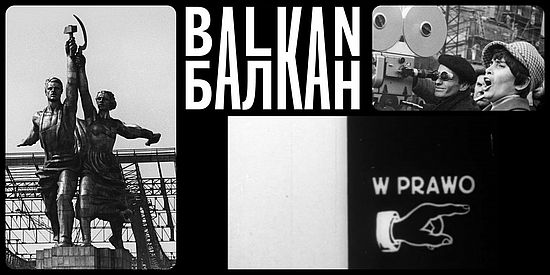
A special feature of Eastern European Studies in Basel is its cultural studies orientation. This includes, among other things, an in-depth engagement with Eastern European film, beginning with an introduction to film studies and continuing with regular courses on Eastern European cinema throughout the program.
Learning at least one Eastern European language is mandatory for all students, and acquiring at least one additional Eastern European language is recommended. Courses are offered in Bosnian-Croatian-Montenegrin-Serbian (BCMS), Polish, Czech and Russian. Courses in Ukrainian, Hungarian and Yiddish are also currently available.
Eastern European Studies is structured into the following areas:
- Language acquisition — first Eastern European language
- Area studies of Eastern Europe
- Historical core: introduction to history, introduction to Eastern European history, basic and advanced modules in Eastern European history, and “Archives/Media/Theories of Eastern European Studies”
- Core area in cultural studies with the three modules: “Slavic Literary Studies,” “Slavic Linguistics,” and “Visual Media in Eastern Europe.”
- Extension area with seven modules (two of which must be chosen): “Art in Eastern Europe,” “Society in Eastern Europe,” “Economy in Eastern Europe,” “Second Eastern European Language Acquisition” (Bosnian-Croatian-Montenegrin-Serbian, Polish, Russian, Czech, or another language).
Short profile
| Degree | BA in Eastern European Studies |
| Type | Degree program |
| Start date | February, September |
| Credit points | 180 |
| Study structure | The Bachelor's degree is the first academic qualification prior to the Master's degree and comprises a total of 180 credit points (CP). The Bachelor's program in Eastern European Studies is a so-called single-subject program, completed without any additional subjects and consisting of 150 CP. In addition, there is a free elective area (30 CP). One ECTS credit point corresponds to approximately 30 hours of work. |
| Subject combination | As an integrated, interdisciplinary full degree program, the Bachelor's program in Eastern European Studies cannot be combined with a second field of study. The elective component consists of freely selectable courses. These may be used to deepen the chosen areas of specialization, to gain insight into other subjects offered by the University of Basel, and/or to acquire additional language skills. In addition to the integrated degree program, the Faculty of Humanities and Social Sciences offers the Bachelor's degree subjectEastern European Cultures, which can be combined with a second Bachelor's degree subject. |
| Language of instruction | German, English, and, where applicable, Slavic language(s) |
| Focal area | Eastern European Studies |
Bachelor’s admission requirements
The Student Administration Office at the University of Basel is responsible for admitting students to bachelor’s programs in the Faculty of Humanities and Social Sciences. This is based on the admission regulations of the President’s Office:
- with Swiss educational qualifications,
- foreign educational qualifications, or
- as a visiting student (not working toward a degree at the University of Basel)
Holders of a Swiss federal Maturität certificate will be admitted to all bachelor’s degree programs.
If you have any further questions, please consult the information provided here.
Registration dates
Students must register for their bachelor’s or master’s degree program within a specified timeframe – even in cases of delayed registration.
Information events
The University of Basel organizes regular information events for bachelor’s and master’s programs. Details can be found on the events page of the Faculty of Humanities and Social Sciences.
Some subject areas also offer their own separate information or welcome events. Please consult the page for the relevant subject area for event dates and locations.
Deadlines and dates for the Bachelor's studies
Students who have earned 60 CP in the subject to be examined or 120 CP in the degree program and have completed the seminar papers that count towards the degree in the subject to be examined or in the degree program may register for the Bachelor's examination. Proof is provided by submitting the module assignment.
Only one subject per session can now be examined. This means that the two Bachelor's examinations can be spread over two sessions (note: only for subjects - it is not possible to separate the two examinations for degree programs).
BA examinations: Due to the free availability of AI text generators (such as ChatGPT), the Faculty of Phil.-Hist. has decided to adapt the way in which the BA examination is conducted. This adjustment is intended to ensure that students are able to do their own work. From spring semester 2023, the BA examinations will once again be written in the university rooms under supervision. These will be digital "bring-your-own-device" examinations. The examination dates remain unchanged.
Please note the updated information sheet on the procedure for BA examinations and the new registration form (subject, degree program). If you have any questions, please contact the Student Administration.
Examinations & graduation
Further Master's studies
The Bachelor's degree in Eastern European Studies qualifies students to continue their studies at Master's level. At the University of Basel, the Master's degree programs in Eastern European History and Slavic Studies (which can be combined with each other or with another second subject) as well as the integrated Master's degree programs in Literary Studies and European History in a Global Perspective are offered. Subject to certain conditions, it is possible to transfer to the Master's degree course in European Global Studies. In addition, the Bachelor's degree in Eastern European Studies opens up opportunities for career entry in the fields of media, publishing, culture (management), business, administration, politics, diplomacy or in cultural, political, non-profit, international organizations or NGOs. However, a supplementary Master's degree is advantageous for this.
Student advisory service
Teaching commission
Quick Links